


 Store Locator
 English
 Spanish


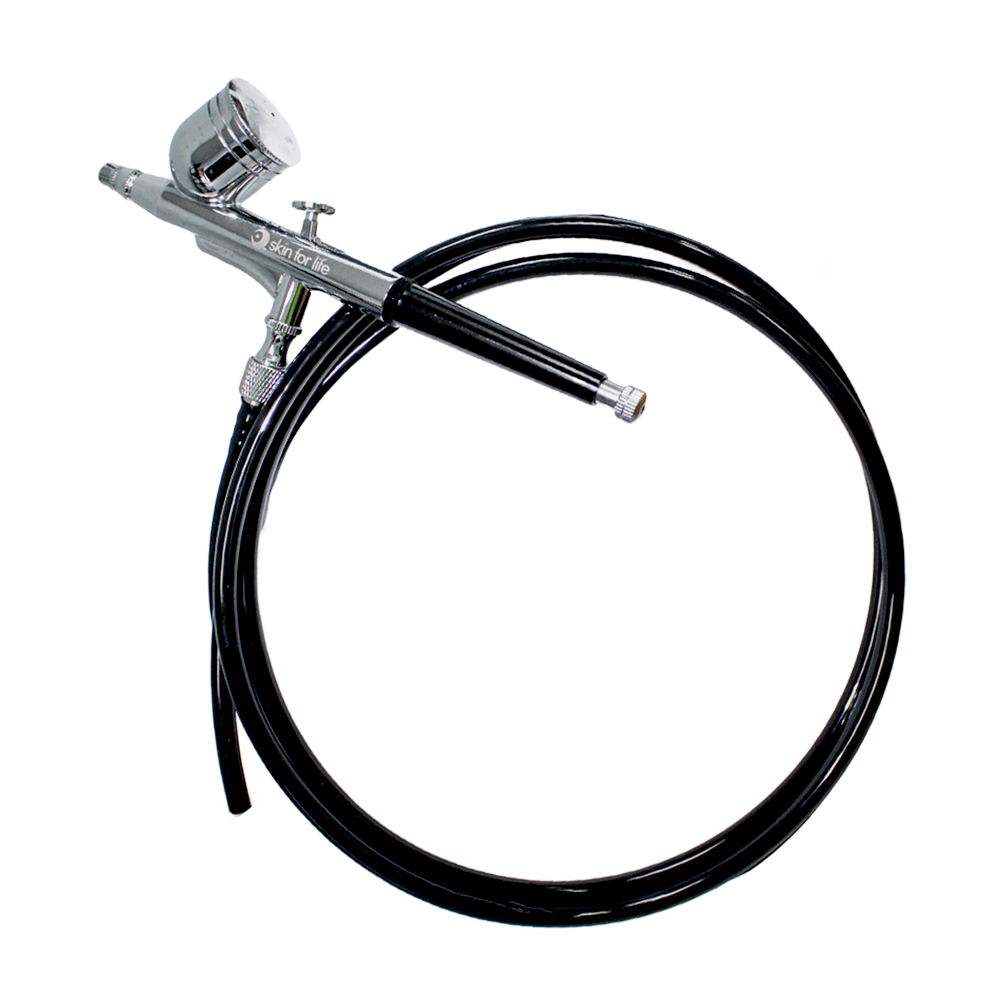
Professional Oxygen Infusion Airbrush with Black Hose
$95.00
Airbrush Hand Piece
Easy to Use & Easy to Maintain. Achieve Instant Skin Results Using Our Oxygen Airbrush.
$95.00
Easy to Use & Easy to Maintain. Achieve Instant Skin Results Using Our Oxygen Airbrush.
The Professional Oxygen Infusion Airbrush Handpiece with Hose gives licensed estheticians greater control over the application of Skin for Life Oxygen Infusion skincare. Constructed with durable stainless-steel components, the airbrush is designed to produce a fine, controlled mist while allowing the professional to adjust delivery according to the treatment area and skin condition.
Rather than applying the same amount of product across every area of the face, the airbrush allows the esthetician to modify the spray pattern and product flow for more precise application.
The adjustment knob located at the back of the airbrush allows the professional to regulate product delivery.
Turn the knob clockwise to reduce flow or counterclockwise to increase flow. A reduced setting can be particularly useful when working around smaller or targeted areas where greater application control is preferred.
For broader areas of the face, neck, décolleté, or body, the flow can be adjusted accordingly to create more even coverage.
This ability to control application is an important part of professional Oxygen Infusion. The esthetician determines how and where the formulation is delivered based on the treatment objective rather than relying on one fixed spray setting.
Inside the airbrush is a precision 0.3 mm needle and nozzle assembly responsible for helping atomize the Oxygen Infusion formulation into its characteristic fine mist.
Because professional skincare passes through these small components, proper cleaning should be considered part of every Oxygen Infusion treatment—not occasional equipment maintenance.
Residual formulation allowed to dry around the needle, nozzle, or internal fluid pathway can contribute to buildup and eventually affect spray consistency. Early signs may include sputtering, interrupted product flow, or an uneven mist.
Skin for Life recommends using O2 Cleaning Solution after every treatment to help remove residual formulation before it dries inside the airbrush.
Post-treatment maintenance is simple:
This quick routine helps keep the fluid pathway clear and prepares the handpiece for its next professional service.
The Oxygen Infusion Airbrush Handpiece is a wear-and-tear component, and its service life will depend in part on frequency of use, handling, and maintenance.
Waiting until an airbrush begins to clog or spray inconsistently is not the best maintenance strategy. Cleaning immediately after each facial helps prevent product residue from accumulating around precision components and can reduce unnecessary disassembly and premature replacement.
For a busy treatment room, those few moments of maintenance can make a meaningful difference.
Perform the treatment. Flush the airbrush. Rinse the system. Prepare it for your next client.
A properly maintained airbrush supports the consistent, controlled delivery that makes professional Oxygen Infusion different from simply applying skincare to the surface.
Professional application should be based on the area being treated, the formulation being used, and the treatment objective. The adjustment control allows the esthetician to modify product delivery rather than using one spray intensity for every client and every area.
A more controlled application can be useful when working around smaller areas of concern, while broader areas such as the cheeks, neck, décolleté, or body may benefit from a wider, more continuous application.
The goal is not simply to use more product. It is to achieve even, intentional coverage without unnecessarily saturating the skin. Understanding how to control your airbrush is part of mastering professional Oxygen Infusion.
The 0.3 mm precision needle and nozzle assembly plays an important role in atomizing the Oxygen Infusion formulation into a fine mist. Because the opening is small, even minor product accumulation can interfere with consistent delivery.
If residue begins building around the needle or nozzle, an esthetician may notice sputtering, larger droplets, reduced output, interrupted flow, or an uneven spray pattern.
This is why airbrush maintenance is directly connected to treatment performance. The finer and more precise the delivery system, the more important it becomes to keep that system clean.
Once a treatment is finished, residual skincare can remain inside the cup, nozzle, needle area, and internal fluid pathway. Allowing that material to sit and dry can make it progressively more difficult to remove.
Cleaning immediately helps flush the formulation before residue has an opportunity to accumulate.
Skin for Life recommends running O2 Cleaning Solution through the airbrush after every treatment, followed by a water rinse. Making this part of your standard treatment-room turnover is much easier than waiting until the handpiece develops a performance problem.
The professional habit should be: finish the client’s treatment, clean the airbrush, rinse it, and then reset the room.
Routine post-treatment maintenance should focus on flushing the fluid pathway according to the recommended cleaning procedure, rather than repeatedly disassembling precision components unnecessarily.
The needle and nozzle are small, delicate parts. Excessive handling, bending, overtightening, dropping, or incorrect reassembly can potentially affect airbrush performance.
If the airbrush is cleaned consistently after each treatment, the goal is to prevent heavy buildup before more extensive maintenance becomes necessary. If performance changes despite proper flushing, inspect the airbrush according to the equipment instructions rather than immediately forcing or manipulating the needle and nozzle.
Preventive maintenance is generally preferable to repeatedly repairing a neglected airbrush.
Pay attention to changes in performance rather than waiting for the handpiece to stop working completely.
An airbrush that previously produced a consistent fine mist but begins sputtering, producing larger droplets, spraying unevenly, experiencing reduced flow, or requiring repeated adjustment should first be properly cleaned and inspected for residue.
The airbrush is also a wear-and-tear component. Even with proper care, precision parts can eventually require replacement after repeated professional use. There is no single replacement schedule because longevity depends on treatment volume, handling, cleaning practices, and frequency of use.
Regular cleaning cannot make a component last forever, but it can help distinguish normal wear from preventable performance problems caused by product buildup. For the esthetician, that means more consistent treatments and fewer unexpected equipment interruptions.
This video provides a step-by-step guide when maintaining, troubleshooting, or operating an airbrush. It is very important to clean and maintain an airbrush after every use.
The small needle assists the Oxygen Infusion phase 2 activator by giving it a direction onto the skin. If the needle is not clean after every treatment, it will build up a coating that will impair the flow of the activator phase 2. We encourage everyone to watch this video, so they are never without an airbrush when performing Oxygen Infusion Skin Treatments.
Trademarked ingredient formulated for Skin for Life. LSS™ delivery is our exclusive Bio-emulsion nano-lipid technology. Our trademarked ingredients assist all skin colors, conditions and types by providing the best quality, innovation and superior bio-available ingredients. Our nano-lipid technology accelerates the effectiveness in ingredient absorption.
Learn more »Additional Companion Products for Proper Airbrush Maintenance
O2 Cleaner comes in (2) 8 fl oz. or 1 fl oz. size. Use 1-2 ml to clean the airbrush after completing an “Oxygen Infusion Facial”.

Oxygen airbrush cleaner for stainless steel airbrush sprayers.
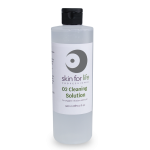
cleans & sanitizes airbrush systems

+ LSS™ delivery

+ LSS™ delivery

+ LSS™ delivery

+ LSS™ delivery

Reviews
There are no reviews yet.